Communication barriers are at the heart of the deaf experience and this is because in reality, deaf individuals can neither live in isolation nor can they find themselves only present in the deaf communities surrounded by people who understand sign language, even though it is known that ASL makes the deaf experience bearable, if not enjoyable.
But since deaf individuals are in the constant everyday mix with the hearing majority, let’s see how technology (apart from and inclusive of ASL) has aided their communication with the general public as well as enhanced their access to information.
Some Specific Daily Communication Challenges Deaf Individuals Face
Although technology has come to the rescue, this does not imply that deaf individuals no longer face communication challenges in society today. Let’s take a look at what these challenges (past and present) include
- Some deaf individuals still struggle to safely communicate with their employers and colleagues at work without being misunderstood. Sometimes because of their hearing conditions and the limited mode of communication made available to them at their workplaces, they might face work discrimination.
- There is a case of low self-esteem hindering deaf individuals from being able to communicate with other hearing individuals. Technology can do little about taking the feeling of internal inadequacy that these deaf individuals constantly struggle with.
- When deaf people try to access various services, they occasionally encounter untimely responses, which is essentially a manifestation of communication barriers. This can be very subtle in that the communication may be perceived as having occurred and the message as having been successfully transmitted, but since it followed a complicated path that is not often taken with hearing people, deaf people end up receiving assistance later than they would have liked.
Assistive Technologies that Help Deaf Individuals Communicate and Access Information
What if you could communicate with deaf individuals who lived in primitive times? Don’t you think that most of them would wish to have had the chance to hear a little, communicate a little, or just simply have the chance to live a better life despite having to deal with their hearing problems?
Well, that happens to be the advantage this present deaf generation gets to enjoy. Assistive listening devices give most deaf individuals a greater opportunity to live a far better life than past generations. Even if it is agreed that some of these technologies are expensive, quite inaccessible, and do not solve the entire hearing problem, their existence in the world generally makes all the difference.
These assistive listening technologies/devices come in different specifications, according to the kind of hearing loss it seeks to address. So, persons with different hearing problems do not necessarily have to use the same assistive device. Yet, in some cases, these devices/technologies can be combined to produce better results. Some of these assistive listening technologies include:
Hearing Aids:

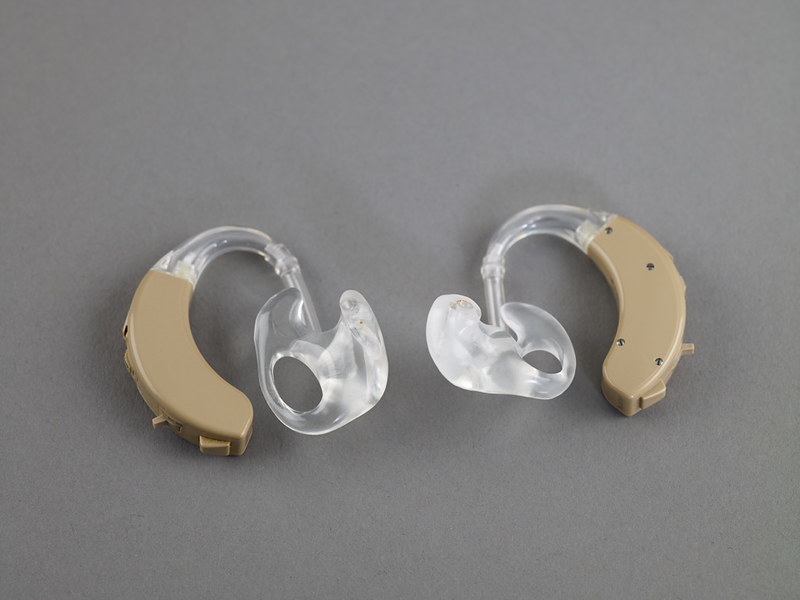
Image by Soichi Yokoyana on Openverse
A hearing aid which could be worn either at the back of one’s ear, inside the ear, or in the ear canal, is a device that helps to increase sound in a bid to help someone who struggles with mild hearing loss. It is also meant to improve understanding of speech sounds in cases where the small sensory cells in the ear have been damaged.
Cochlear Implants
Unlike hearing aids which are devices used by people with mild hearing loss, cochlear implants are for people who suffer profound hearing loss, so that they can have some sound perception. While hearing aids are placed at the back or inside the ear without surgery, cochlear implants require surgery.
While hearing aids amplify sounds, cochlear implants aid hearing through electrical stimulation.
You can find out detailed differences between hearing aids and cochlear implants here.
Frequency Modulated Systems (FMS):
The FM system usually entails two parts. The transmitter is used by the speaker and the receiver is used by the hearer (the person struggling with hearing difficulty). This device, mostly suggested to be used in classrooms, helps the voice of the speaker get amplified above any background noises no matter the position of the receiver.
Additional Assistive Listening Technologies Used by Deaf Individuals
- Infrared systems
- Loop Systems
- Bluetooth Enabled Devices
- Personal Amplifiers etc.
These assistive listening technologies as mentioned earlier can be used collaboratively. Aside from these forms of listening technologies, there are other ways that deaf individuals can communicate and access information. They include:
Video Relay Service and Video Remote Interpreting
The VR service can simply be viewed as a form of visual telephone conversation. It takes place when a normal telephone conversation occurs through VR service where one party–the deaf or hard of hearing individual uses a video camera to capture what they want to say using sign language and the VR operator makes that message understood by the other party simply by turning the message to text format.
To find out the difference between VRS and VRI, click here.
STTS (Speech-To-Text-Services)
This is the umbrella under which the term “captioning” falls. It turns what is being said into what can be read. Deaf individuals utilize this particular technology like it is a form of audio and video transcriptions.
This is where subtitling in movies also falls. Where the deaf individual is entertained not by hearing what is said, but by reading what is written. This shows the importance of educating the deaf.
RTT (Real Time Texting)
This is an especially beautiful form of texting that carries a very conversational tone because it involves a person receiving a message while it is being created. So, for a deaf person, it feels like you can hear the person’s (creator of the text) thoughts as he or she composes the message.
Conclusion
Are you aware of other forms of technology that deaf individuals use to communicate and access information? It is a good thing to know that technology all over the world is undergoing constant advancement. Therefore, one can say that the present and future generations of deaf individuals can hope to live better lives. Yet, the only problem that remains is if deaf individuals, though aware of these technologies, will be able to afford them.
Sign Language (ASL) used as a communicative tool by deaf individuals and hearing individuals alike remains a very cheap means of communication and if continually and deliberately embraced by more societies, a safe way for dead individuals to access information.
Do you want to learn ASL today? SignBee Academy has ASL learning resources that can help you learn ASL conveniently and proficiently.
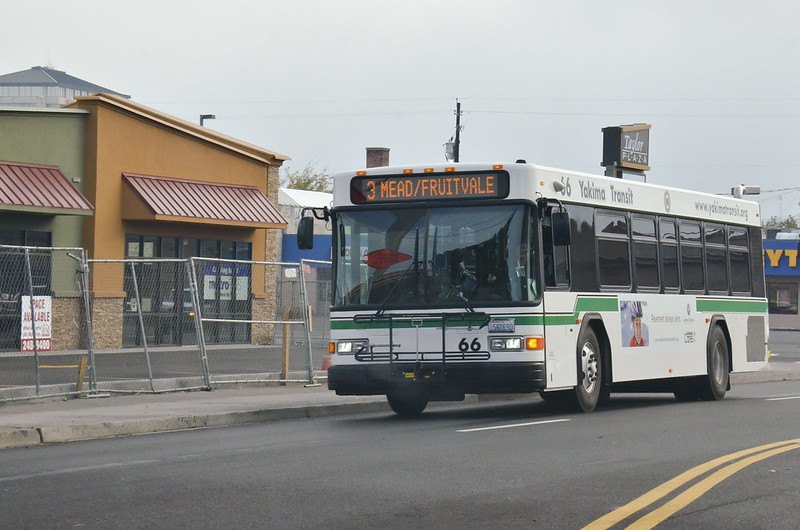
Thumbnail Photo Credit to: Image by Birmingham Museum on Openverse