Poor knowledge about your medication can kill you. For example, there is a drug called aspirin, which in low doses can prevent you from having a heart attack. There is another drug called Warfarin used to break up blood clots. Taking both drugs concomitantly can cause excessive bleeding and even death.
Now, imagine being on aspirin and not knowing that your doctor meant for you to stop aspirin and switch to warfarin. What is most likely going to happen? The sad thing is, this sort of thing happens more than you would like to deaf people.
Consulting health professionals is still, for the most part, verbal and this can be a huge barrier to wellness for deaf individuals. With this poor information, there can be a drop in the quality of health and even death.
How, you might wonder, do deaf people access information and support for health and wellness? Are the current methods the best they can be?
These and more will be examined in this article.
The Current State of Access to Health Information for Deaf People

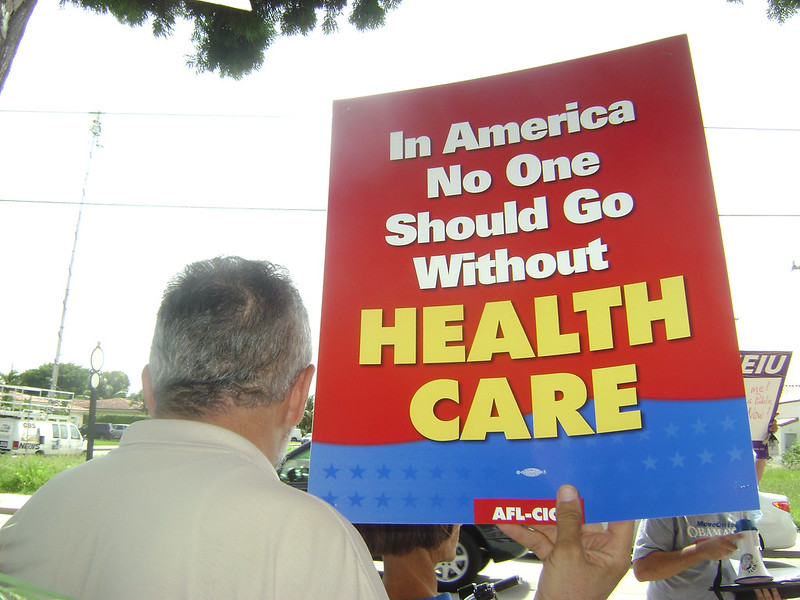
Image by IITA on Openverse
What would you call failure? Maybe it’s not achieving what you set out to achieve. Maybe it is not putting enough effort into what you want to do. Or maybe it is not learning from the mistakes of the past.
As regards access to health information, the health system might’ve failed deaf people. Deaf individuals who only communicate through sign language are already at a disadvantage if they want health information. Why are they disadvantaged? Because many health institutions don’t have adequate communication tools for them.
There aren’t enough interpreters, and reliable information isn’t readily available through the media. For example, many hospitals don’t have services where deaf individuals can chat with doctors or pharmacists.
For all the advancements in medicine and health in general, consulting is still a face-to-face audio-visual process with little room for communication with deaf individuals. Medical staff aren’t prepared in their training to communicate with deaf individuals and this reduces the quality of care deaf people get.
You might think that having more deaf people go into medicine will help, and you would be right. However, education for the deaf is its own can of worms that has to be dealt with.
Interpreters are the best solution, but many medical institutions aren’t willing to invest in getting professionals. Maybe it’s because they believe the deaf population is small. What many people fail to realize is that almost a quarter of the human population is hard of hearing and that many of them stay away from these hospitals because they know they won’t be heard.
The current state of access to healthcare for the deaf is poor. There is no circumventing it, there is more than a room for improvement.
So, the main question is: how are deaf people getting medical information? Let’s find out.
How Deaf Individuals Access Information and Support for Health and Wellness
Barriers are meant to be overcome, and that is what the deaf community has done with the challenges of accessing information and support for health.
There are a couple of things deaf individuals do to access information and support regarding their health that mitigate the barriers they face.
Visit Deaf-friendly Facilities
Customers usually go where they will get the best service. Sometimes even a low cost isn’t enough to attract clients. This also applies to health facilities. One major way deaf people overcome the barriers hindering them from getting health support is by going to facilities that are deaf-friendly.
The first thing a person who is hard of hearing might do is search for a clinic that is deaf-friendly.
This means that the facility has alternate means of communication that will be beneficial to deaf individuals. In some cases, these facilities might have interpreters. They might also have captions for audio messages, and text communication software to facilitate consultation.
Such facilities are few and far between, but with advocacy, more traditional hospitals are becoming deaf-friendly.
Use of Technology
In modern times, technology has become a vital part of the well-being of deaf people. There are more and more software and gadgets that can instantly provide a means of communication between the deaf and the hearing.
Deaf people take these technologies to health facilities to improve the quality of healthcare they will get. In some cases, deaf people simply go with their phones and have back-and-forth interactions with a doctor via text.
In other cases, some hospitals have virtual consultation options where the patient can communicate with a professional through an app. This improves the quality of service deaf individuals get and reduces the probability of misunderstanding.
Technology might turn out to be the fastest way to bridge the gap between the deaf and hearing populations because it doesn’t require the hearing population to learn a new language.
More areas are being explored to aid communication like hearing bots and other AI companions.
Use of Interpreters
With more than a quarter of the world’s population still disconnected from the internet, technology isn’t a viable option for many deaf individuals when seeking medical assistance or information.
So, in such circumstances what can deaf people do? They are forced to rely on interpreters. They go to the hospital with interpreters who help them communicate with health professionals. In other cases, they rely on interpreters provided by non-governmental organizations or the hospitals themselves.
The use of interpreters is useful as deaf individuals can express their needs clearly and the health professional can respond and make recommendations too.
While interpreters are a good idea, such services aren’t free in most cases, unless the deaf individual has a family member that understands sign language and is also part of the hearing community.
The legislation will help with mandating health facilities to have interpreters. That is one point of activism that needs to be discussed and implemented in various countries.
Conclusion
Health is important to everyone including the deaf community which is why the way they access this health is vital. While it is important, the hearing community hasn’t done enough to improve the quality of health of deaf individuals.
There are still communication barriers and poor dissemination of information. The good thing is that with the use of technology, more deaf people have access to health and wellness information. There is also the use of interpreters and a rising number of deaf-friendly health facilities deaf individuals can visit.
Still, these solutions adopted by the deaf community aren’t available to all members of the community. With increased awareness of the health needs of deaf people, followed by beneficial legislation, deaf people will get what is theirs: access to health and wellness information.
You may not be a health professional, but you can be the interpreter who helps deaf individuals during a health crisis or emergency. Learn ASL today with SignBee Academy learning resources because ASL remains one of the most important languages in society seeing that the deaf population continues to increase.
Thumbnail Photo Credit to Image by Jorge Elias on Openverse