Imagine wearing noise-canceling headphones in an airport as you wait for your flight. You won’t hear your flight being announced over the public address system unless someone calls your attention to the announcement.
Deaf individuals are like people who are always wearing noise-canceling headphones. They need help under certain conditions and that help has to come from people with normal hearing. The help that people with good hearing can provide ranges from policy-making to physical help.
A shocking statistic is that more than half of the deaf population in the United Kingdom need mental help at one point in their lives. The toll hearing loss takes on the mind can’t be quantified and the least hearing individuals can do is make life more comfortable for those with less hearing.
So, how can hearing individuals support those who don’t hear as much? How can they advocate for a better life for the deaf? These and other related questions will be answered in this article.
The Barriers Deaf Individuals Encounter
Deaf individuals face barriers that hearing individuals might not think of. These barriers can alter their quality of life if they aren’t overcome. While there is room for adaptation of lifestyle, there is so much adjustment a person can make without external help.
The first barrier most deaf individuals encounter is confusion. This is common when the loss of hearing is not from birth. There is confusion regarding where to get help, what sort of technology to use, and how to navigate life.
Another barrier is education. People who are hard-of-hearing can’t be taught the same way as hearing individuals. So, they must have a special curriculum, teachers, facilities, and learning materials. The first challenge with educating the deaf is teaching them ASL. Without it, communication becomes a chore.
There is the challenge of poor awareness of their needs. The hearing population might go on with their lives building a society that excludes the deaf community without knowing it.
Ask yourself, how can a person who can’t hear sound, navigate a world with sound? They can’t without the help of those who hear. So, without the assistance of the hearing population, these barriers will continue to haunt the deaf community.
How Hearing Individuals can Support and Advocate for Deaf Individuals
There are many ways the hearing populace can help the deaf community overcome the barriers they face daily. These steps are multifaceted and will involve the commitment of whole populations.
Some are easy steps and are things you can accomplish on your own. While others are more complicated and require the intervention of experts.
Step #1: Be Inclusive in Your Communication
There is a need all humans have, which the deaf community grips to meet more than anyone else. Everyone wants others whom they interact with to understand them. Toddlers and little children throw tantrums because they aren’t understood and can’t convey their thoughts and feelings.
The same frustration haunts the deaf community. Imagine a scenario where a deaf person comes to buy something at your store and there is no means of communication. It would be frustrating for both parties.
People who hear well need to bridge the communication gap between them and the deaf community.
One way to do that is to include basic ASL training in our schools. That way, we will raise a generation of children who can communicate with those that are hard-of-hearing.
Another step is to have interpreters at public events. That way, the deaf community can be included and not feel ignored.
Step #2: Increase Awareness
Do you know that all deaf people all over the world don’t speak the same sign language? This is an example of misconceptions those who hear, have. In reality, there are more than 130 variations of sign language.
Awareness of deaf culture and needs is something that needs to be ramped up by the hearing community.
One way to increase awareness about deaf culture is to arrange events where deaf individuals and those with good hearing are mixed. The younger the mixing happens, the more successful the awareness program will be.
The media can also be used to elevate deaf culture by showing events including the deaf olympics. There can be health talks, and training for professionals like teachers, police, military, and health professionals.
With an increase in awareness of the needs and culture of deaf people, more hearing people will be involved in lending a helping hand in building an inclusive society.
Step #3: Legislation and Policies

Image by Maryland GovPics on Openverse
Imagine a law that states that “all citizens should leave their phones at home once they get an audio message from the government.” It might sound like a scene from a dystopian future, but it is a fictional example of the type of law that can hurt the deaf community.
Policies build or break a community and the deaf community is not immune to its effects. They shouldn’t be just an afterthought, a tick on a long political list. Their needs should be properly addressed during the policy-making process.
Transportation will be easier for deaf individuals if all bus stops are mandated to have working signs that tell where each vehicle leaving the stop is going.
Education will be easier for deaf individuals if institutions are mandated to have speech-to-text software.
In addition to pressuring the government into making deaf-friendly policies, deaf individuals themselves should be encouraged into politics and run for office.
They don’t need the hearing population to be their mouthpiece, stating their needs. They can speak for themselves. All they need is an invitation to the discussion.
Conclusion
Deaf individuals have specific needs which can easily be ignored by the hearing population. The first and most important step in bridging this divide and meeting their needs is to improve communication.
Hearing individuals will improve the lives of deaf individuals if they communicate properly with them. Learning ASL is a good step in that direction.
Learn ASL today with ASL learning materials from the SignBee Academy.
In general, deaf individuals have needs and it is the hearing population that can meet most of those needs.
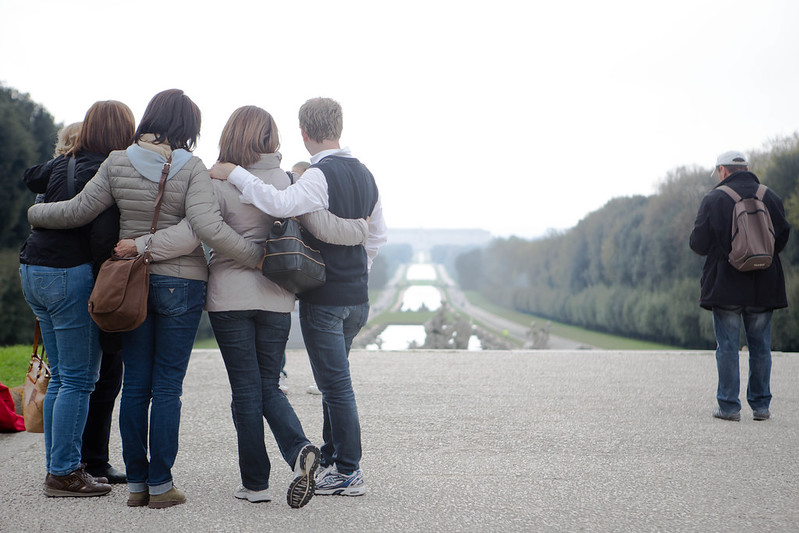
Thumbnail Photo Credit to: Image by Nicola on Openverse