It is difficult for parents to simply try out a technique they don’t fully understand on their babies. After all, there are future implications to think about. No parent wants to deal with the guilt that comes with making the wrong decision regarding a child and watching the child live with the consequences of that decision.
So, it isn’t a surprise that you are here, wondering about the cognitive impact baby sign language can have on your child. You should be sure that teaching your baby to communicate without words won’t have negative effects on the child’s development.
We want to set the record straight in this article and detail the impact of baby sign language on your child’s cognitive development. Let’s dive right in.
Baby Sign Language: An Overview
It is easy to fear what you don’t understand, however, that isn’t helpful. Before you bar your child from making any signs, you have to understand what baby sign language is.
If you know anything about baby signing, you will know that it isn’t a language in the traditional sense. It is simply a collection of basic gestures a baby can learn which will help them communicate better with a parent or family member. What people call baby sign language lacks the depth and innuendos that come with traditional languages.
In most cases, babies are taught about eight signs and they can include the sign for hungry, sleepy, milk, poop, carry, and urinate. The exact signs a baby learns depends on the needs of the baby and what the parents feel is necessary to learn.
For example, a family in a temperate region might want to teach their baby the sign for cold, while the reverse will be the case for a family residing in the tropics.
Consider it a “do-it-yourself” communication tool where you build communication surrounding your particular scenario.
You should know that you can alternatively take a more standardized path. You have the option to follow a pattern and teach your baby a set of pre-existing signs. It can be from a chart or a video.
Baby sign language is an old method of teaching babies to communicate without words. It was first discovered that babies had understanding of signs as early as four months.
The Fears Parents Have Regarding Baby Sign Language
Nothing gets a parent’s gears working like something that can be harmful for their child. It is a natural response with many parents automatically responding to a perceived threat without giving it a thought.
The biggest fear that parents have when considering baby sign language as a communication tool is its perceived impact on speech development. There is a general fear that a baby that learns to sign early, won’t begin speaking when they should.
Research, however, tells a different story. It has been said that babies who use sign language before they can speak go on to develop speech at the expected rate. After all, children born to hard of hearing parents with perfect hearing go on to speak just fine.
Baby Sign Language and Cognitive Development

Image by Jungmoon on Openverse
With all the background set, we should now tackle the elephant in the ASL room. What effect does baby sign language have on your child’s cognitive development?
It is important to know that research on the subject is still ongoing partly because it is relatively new and also because it involves children. However, the research that has been carried out already, clearly points to there being cognitive benefits and not drawbacks.
One benefit to baby sign language is the enhancement of memory. The exact way that happens isn’t clear but research has pointed to an improvement in the memory of children who use sign language as babies. They are challenged to remember words and use them too.
Another benefit has to do with spoken language. Children who signed when they were babies tend to have a better understanding of spoken language as they develop. The exposure to a concept of language before speech is developed can help the child develop faster.
Another cognitive impact of baby sign language is on the child’s general understanding of the world around them. With an effective way to communicate with their parents, babies gain a better understanding of the world around them. As they get older, they might grasp more complex things quicker than their peers.
Teaching your child baby sign language will reduce the level of frustration they feel and battle the notion that they will get what they want by crying. With this option to communicate, their cognitive reasoning increases, preparing them for the world beyond infancy.
Successful Implementation of Baby Sign Language
Like most things in life, there is a wrong way of teaching a baby sign language. The best way to ensure this doesn’t happen is to understand the best implementation practices when teaching a baby sign language.
The first tip is to use simple signs. Don’t be overly complex, trying to get your baby to form a sentence. Remember that bay sign language isn’t a language in the actual sense but a careful selection of gestures to aid communication.
As you gesture with your baby, say the word. When saying the word, also remember that you are communicating with a baby and say it slowly. This teaches the baby to recognize the sign for the word as well as the sound. In the long run, this will aid speech development.
Practice the signs regularly with the baby. Always use the sign and say the word when communicating with your baby. Repetition will make the sign stick and before you know it, your baby will be signing along with you.
Conclusion
Parents are protective of their babies by nature, so it is expected that there will be concerns regarding teaching your baby sign language at an early age. It is clear that the impact baby sign language has on cognitive development is positive. There is better memory, a quicker understanding of spoken language, and a deeper bond with a parent.
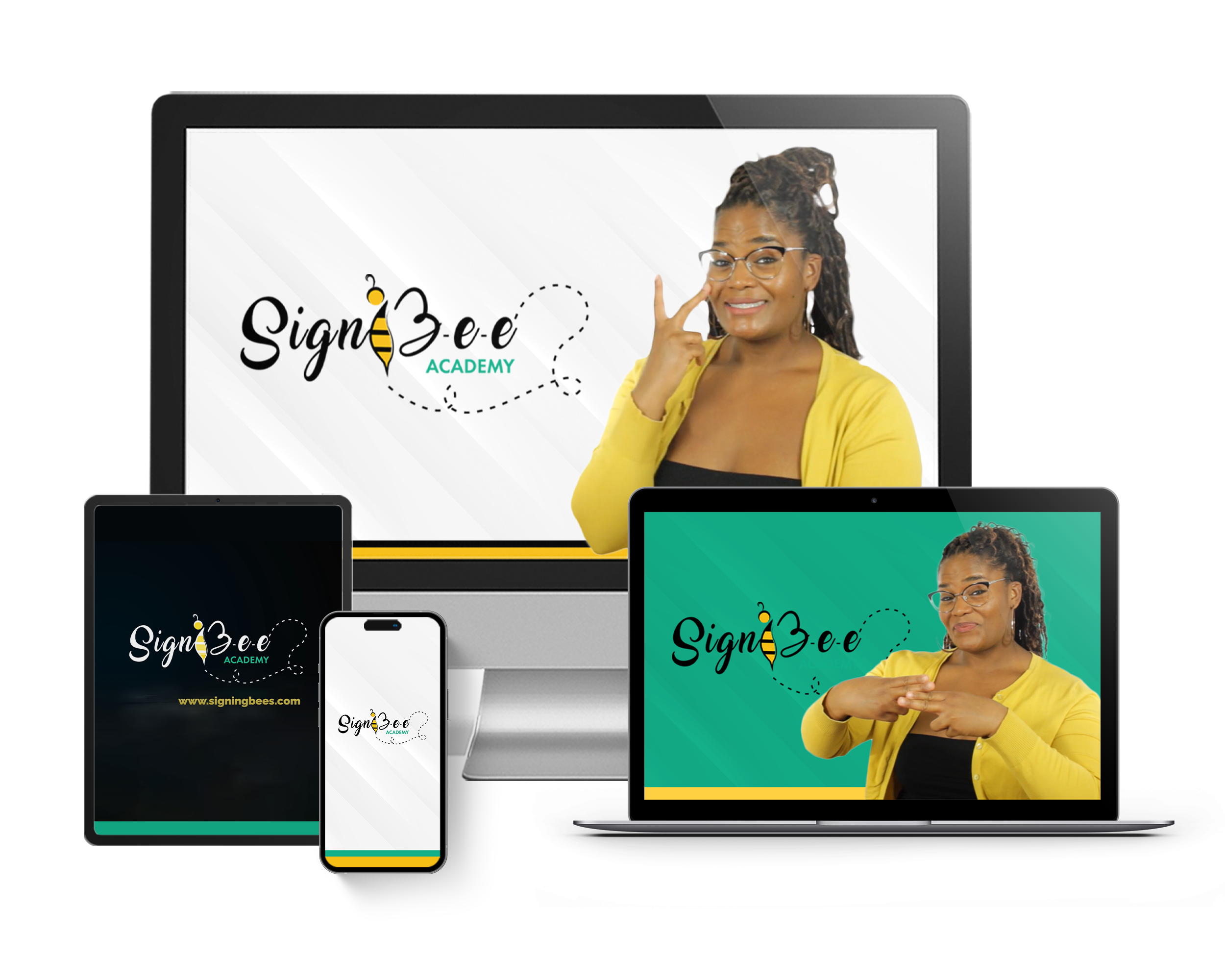
With all these benefits and more, you might be interested in giving it a go with your baby. The question is: where do you start? There is only one answer to that question and that is, SignBee Academy. With ASL learning resources, you can help your baby with baby sign language.
Thumbnail Photo Credit to: Image by Lavender Dreamer on Openverse