‘Deaf President Now (DPN)’ was a response, in 1988, to an idea held by the Gallaudet Board of Trustees. The idea was that deaf people weren’t ready to lead. The DPN movement made such an impact that to this day, its defiance in the face of discrimination is felt.
Like the students and other deaf activists of 1988, there are still deaf people involved in civic activism and the political process. However, many of them are lost in history, never mentioned in the Hall of Fame. Before you go any further in this article, know this: deaf people do participate in the political process and civic activism.
It will also be short-sighted to assume that they only band together to fight for causes that directly affect them. They fight for things that matter to society like climate change and good governance.
How they do this, is the meat of this article. So buckle up and prepare to see how a group of people take societal well-being seriously.
The Challenges Faced By Deaf People When Participating in Politics or Activism

Image by Technofreak on Openverse
There is a way that people engage in politics in different parts of the world. In many cases, these processes are hundreds of years old and haven’t really changed over time. For deaf people, that is a problem because if history has any truth, it is that deaf individuals were mostly ignored in politics.
The methods by which new leaders were placed and maintained in office, by design, excluded deaf people from participating.
A simple example can be seen in the use of radios to disseminate information to the masses. A radio, while an effective way to broadcast information to a large population, is inherently useless to a deaf person. So, deaf people had to rely on secondhand information.
The thing is, in many countries, the radio is still used to broadcast information like election results, public announcements, manifestos of candidates, and election dates.
One other vital part of politics and activism is town hall meetings. A group or community meets to choose a leader, discuss solutions to problems, or just make their grievances heard. Deaf people, while allowed to attend, can be ignored and relegated to the sideline because, in many of these meetings, there is no interpreter.
With this exclusion, deaf people can be discouraged from participating which is seen in their apathy towards many activities like voting and protests that don’t address one of their direct needs.
There is also a bias towards deaf people when it comes to leadership. The idea that deaf people don’t have all the skills to lead has been held by the hearing population for centuries. While it is getting better in modern times, it is still a formidable barrier to activism.
How Deaf People Participate in the Political Process and Civic Activism
If you think that deaf people take the challenges mentioned above as their fate and don’t participate in politics or activism, you will be wrong. They have found ways to overcome the barriers set before them and be part of society. How do they do it? Let’s have a look.
Use of Technology
While technology seems to have progressed faster than humanity is prepared for, the deaf community welcomes it because it is one of the most important bridges between them and the hearing community.
Deaf people use technology like speech-to-text software to engage in political discussions. More public meetings are having closed captions so deaf individuals can follow these discussions.
With an increase in media technology, developed countries are disseminating information via text and captioned videos. If this rate is kept, deaf people won’t miss out on vital political information because they can’t hear what is said over the radio.
Television broadcasts don’t always have captions which can be a setback but with speech-to-text technology, deaf individuals can participate.
Deaf individuals can also use technology to campaign and lobby for positions. For example, in rallies, megaphones can be used, and pre-recorded speeches can be played. There can even be virtual rallies.
Much of activism is done online these days, and deaf individuals are more involved in the discussions being had in online spaces than they have been in physical spaces throughout history.
So, with technology, deaf individuals are doing more and being included in more political discussions. There is more to be done but the current steps are in the right direction.
Sign Language
It has been previously mentioned that in public spaces, public address systems like megaphones and speakers are used to speak and interact with large crowds. It is a no-brainer that these methods of communication are not useful to the deaf community.
For this reason, sign language remains a vital method by which deaf people participate in politics and activism.
For example, in Guinea, the International Foundation for Electoral Systems (IFES) collaborated with the deaf community to have interpreters at public rallies and campaigns. This increased the participation of deaf people in the elections.
So, deaf people rely on interpreters for public interaction and participate through them as well. With an increase in the use of interpreters, there will be higher participation in politics and activism by the deaf community.
Mobilization
In many cases, the deaf members of a community band together. This coming together to form a body improves the members’ individual lives and gives them a voice they wouldn’t have on their own.
Deaf people mobilize and have meetings to come up with productive ways to participate in politics and activism. When they are organized this way, they even come with their interpreters so no one is left out of discussions.
This process, in some cases, has led to the election of deaf individuals into public offices. With mobilization, deaf individuals have participated in politics by providing insight into ignored communities in society.
Conclusion
Deaf individuals have been ignored in society for a while, struggling to be part of political and social discussions.
However, with legislation, governments can do more to include deaf people in these activities with the hope that someday, they get as involved as the rest of the population.
As noted earlier, the role of sign language can not be overlooked in helping deaf individuals participate in various political processes.
What do you do when you meet a deaf individual during a campaign or other political activities? Join the hearing populace learning ASL today with learning materials from SignBee Academy and help more deaf individuals participate in their civic duties.
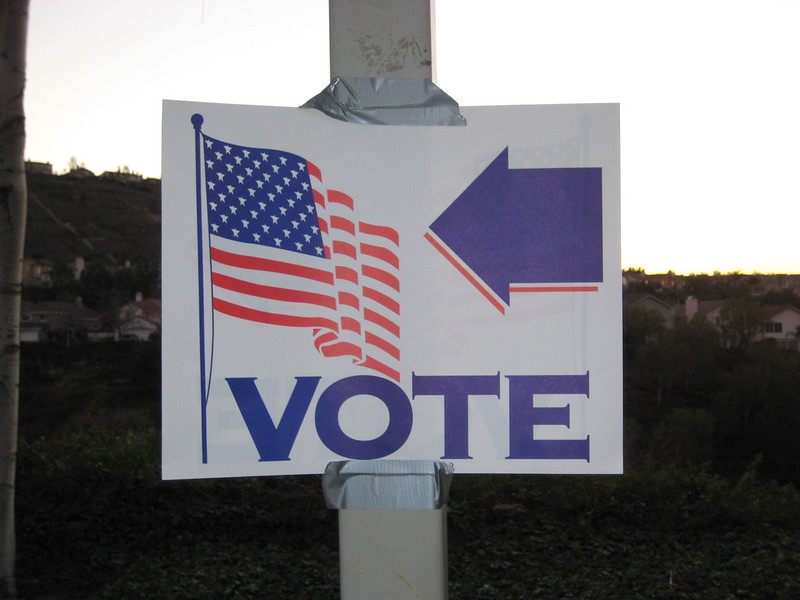
Thumbnail Photo Credit to: Image by Kgroovy on Openverse