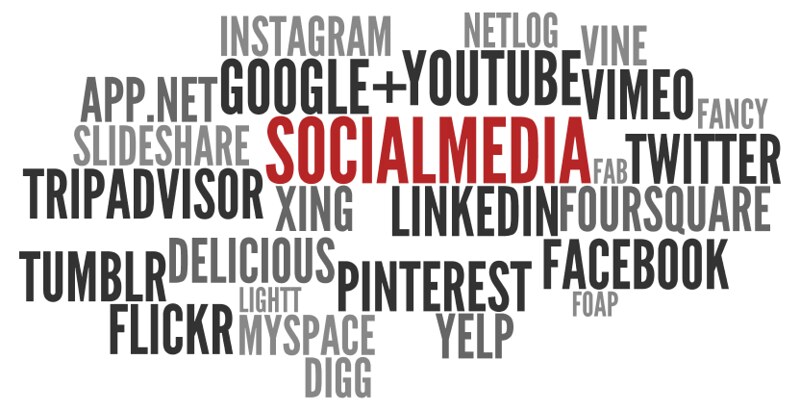
All over the world, people are constantly looking to build human connections, which is why there are several social media platforms in the world. It is not a misplaced desire rather it is how we have been built on the inside.
Humans want to share who they are and what they feel not minding if they share with people they do not know. Online communities are made up of deaf individuals as they are the hearing populace.
Deaf individuals use the internet and engage in social media platforms. How? You will find out in this article.
Origin of Social Media
You will be surprised to learn that ‘electronic social media’ began sometime between the 18th and 19th centuries. Although facts on the exact date vary, the use of the telegraph as part of its origin is common among the various sources.
Why Is It Termed ‘Social Media’?
Social Media is so termed not because it simply enables people to connect with their loved ones rather, its name explains the ability of the different social media platforms to connect individuals with the world.
From access to people you know and do not know, to access to knowledge/information and facts that people may never have found in their limited worlds, social media keeps breaking the barrier, empowering individuals and thus societies.
Relevance of Social Media to Deaf Individuals
- Deaf individuals can use different social media platforms to seek, join or create advocacy platforms that are used to create deaf awareness, tell their experiences, share their struggles, and solicit help in areas where it is needed.
This is how a lot of deaf individuals have vlogs on Youtube where they share sign language lessons for the deaf, hard of hearing, and hearing populace.
- Through social media, deaf individuals have also been able to access online services including consultations.
- Following the reason above, deaf individuals have been able to access education and employment opportunities from these online platforms by connecting with different individuals and organizations around the world. Especially now that remote work is fast taking over the labor market.
- Gradually the communication barrier between deaf individuals and those who hear is broken in some societies as a result of social media exposure of the deaf community and culture as a whole.
As a result of these reasons and more, the stigma on deaf individuals continues to fade.
Ways Deaf Individuals Use the Internet
Image by br1dotcom on Openverse
Accessing Written Online Content
Educated deaf individuals who can read or write simply access online information and communicate on social media through writing and reading written content. When what they need online is something they have to watch, that is where the use of captioning and subtitling comes in.
Accessing Video Online Content
For video content, deaf individuals use the captioning and subtitling tools. This gives an interpretation and transcription of what the deaf individuals are watching.
For Social Communication
Email and Messaging:
This also has to do with written communication. Where ideas and opinions are exchanged via emails and text on Facebook, Twitter, or Whatsapp.
Video Conferencing
Deaf individuals can connect with family and loved ones through video conferencing platforms that offer sign language interpretation accessibility features. For example, Zoom.
Microsoft Teams on the other hand enhance deaf individuals’ online social communication by offering real-time captioning and allowing sign language interpreter integration. For Google Meet and Cisco Webex, there are also accessibility options for sign language interpretation.
Participating in Different Online Deaf Communities
There are several online deaf communities where deaf individuals are finding each other and communicating with each other without having to feel less of themselves.
For Online Education
Visual Tools
While online educational materials are readily available in written formats, visual tools such as pictures, and drawings are also sorted out by deaf individuals as supplements to lectures.
Assistive Listening Technologies
From hearing aids to loop and infrared systems to cochlear implants, hard-of-hearing individuals can access information and socially connect with people far and wide.
Challenges Deaf Individuals Face in the Online Space
- Limited accessible content as not every online content is readily accessible for deaf individuals or deliberately made with them in mind.
- Lack of Sign Language Interpretation. Some people see ASL and other sign language as the languages to be used by deaf and hard-of-hearing individuals only.
- Poor Awareness/ Insensitivity Towards Deaf and Hard of Hearing Conditions. This has made it so that some people still confuse deafness for hard of hearing and vice versa. They not only do not see the need for understanding ASL, they speak out of tone with deaf and hard-of-hearing individuals and make it easy for them to be misunderstood.
- There is the issue of exclusion. Deaf individuals because of their hearing conditions are sometimes unintentionally completely excluded from online conversations because somehow the hearing majority in the group has forgotten there might be deaf minorities among them and as such use communications that the deaf individuals cannot understand.
Conclusion
What do you think about the different ways deaf individuals connect through social media and how they access information? There is no doubt that you understand that for deaf individuals to find connection with and within the world they live in, a lot of things have to be put in place.
From seeking content with captions and subtitles so they can read and understand what they are trying to access, to desperately checking for sign language interpretation accessibility features or constantly possessing an assistive listening device and having to explain their need for emailing and texting instead of regular calls, social media is a win while it isn’t being one at the same time.
Do not shut out the deaf individual around you because you do not understand sign language (ASL). A lot of people who learn ASL today do not only learn the language for themselves and their daily interactions. Instead, their learning makes it one step easier and closer for those around them to learn as well and thus foster better interactions with other deaf individuals.
We are not only in a small world, we are only one step ahead or behind from being helpful. With the ASL learning resources from SignBee Academy, you can learn ASL today.
Thumbnail Photo Credit to: Image by MySign AG on Openverse